A slab leak is a break in a water line that runs under or inside your concrete foundation. You cannot see it. The floor looks fine, but water keeps escaping into the ground below your house. Slab leak detection in Greeley, CO starts with one goal: find the exact spot before anyone cuts concrete.
Many Greeley homes sit on a slab or have slab-on-grade sections. Garages, additions, sunrooms, and laundry rooms often do too. When a pressurized line cracks under that concrete, the damage grows slowly. You may notice it first on your water bill.
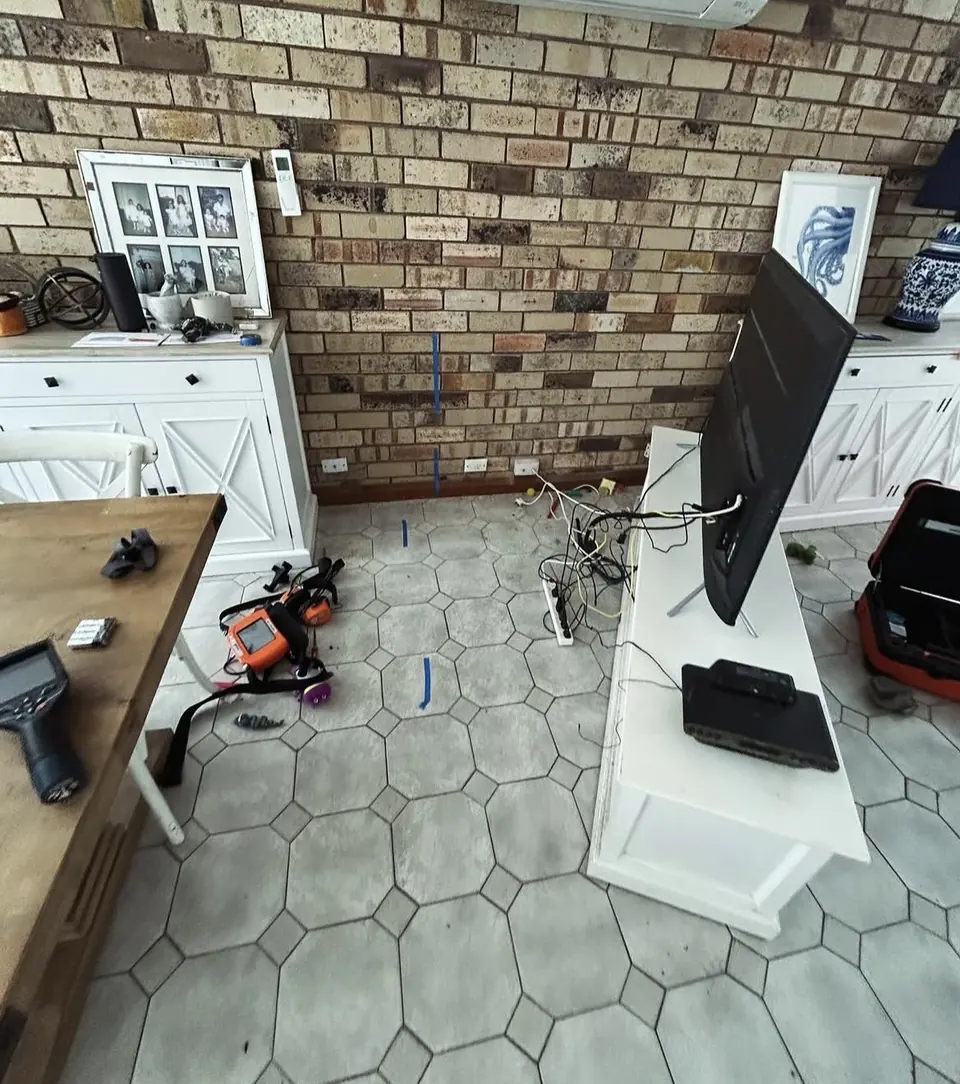
We find the leak, mark it on your floor, and write down what we found. A licensed plumber can then repair it through one planned opening. You do not pay to open the wrong part of your house.
Signs of a slab leak in a Greeley home
Slab leaks hide well, but they leave clues. Watch for these:
- A warm spot on the floor. A leaking hot water line heats the concrete above it. You may feel it with bare feet.
- The sound of running water. You hear a hiss or trickle when every tap, the ice maker, and the washer are off.
- A meter that keeps moving. Water use shows up on the meter even when nobody is home.
- A bill that climbs. Your use rises with no change in your routine. In Greeley, extra use can push you into a higher billing tier. Our guide to how Greeley water budgets work explains why that stings.
- Low water pressure. Taps run weak because water escapes before it reaches them.
- Damp carpet, lifting tile, or a musty smell. Water that cannot go down starts to move up and sideways.
- New cracks in floors or walls. Escaping water can wash soil out from under a slab. Cracks may follow.
- Water at the foundation edge. Wet soil or a damp spot outside near a slab edge deserves a look.
One sign alone does not prove a slab leak. Two or three together make a strong case for a leak detection visit.
Why slab leaks happen here
Greeley sits on the Front Range, where many soils contain clay that swells when wet and shrinks when dry. The Colorado Geological Survey maps these swelling soils along the Front Range Urban Corridor. A slab can shift a little as that soil moves. Pipes under the slab shift with it.
Other causes add up:
- Pipe age and wear. Copper lines can develop pinholes over decades. Steel and galvanized pipe can rust through.
- Rubbing. A pipe that touches concrete, rock, or another pipe wears through. It expands and contracts with each hot water cycle.
- High water pressure. Constant pressure stresses weak joints and old fittings.
- Poor installation. A bad bend or a poorly supported run can fail years later.
- Freeze damage. Pipes near a slab edge or garage wall can crack in a hard cold snap and leak after the thaw. Read more about freeze and thaw leaks.
Is it really a slab leak?
A wet floor does not always mean a slab leak. Water can come from a dozen places. We rule out the simple causes first, because that saves you money.
A leaking shower pan, supply line, washer hose, or sweating pipe can mimic a slab leak. So can groundwater seeping through a basement or crawlspace wall. Our page on leak or groundwater shows how to tell the difference.
We also check whether the water comes from a pressurized supply line or a drain line. The tests differ. A supply line leaks all day and shows on your meter. A drain line leaks only when you use water.
How we find a slab leak
We work from simple tests to precise ones. Each step narrows the search.
- We talk with you. We ask when you first noticed the problem, where it feels warm or damp, and what your bills look like.
- We run a meter test. With every fixture off, we watch your meter. A moving dial proves water is leaving the system. Our water meter leak test guide shows how you can do this yourself first.
- We isolate the lines. We shut off valves to learn which line leaks. It may be the hot line, the cold line, or the main line from the street.
- We listen. Sensitive microphones pick up the sound of water escaping under pressure. The sound gets louder as we move closer to the break.
- We scan with thermal imaging. A hot water leak warms the concrete. A thermal camera shows that warm patch on the floor surface.
- We pressure test. We hold a line under pressure and watch for a drop. The result tells us which section fails.
- We pinpoint and mark. We cross-check the listening and thermal results, then mark the leak on your floor with tape or paint.
The goal is a single, confident location. Good detection means the repair crew works in one place.
What you receive after the visit
You leave with two things. First, a mark on the floor where the leak sits. Second, a written report that says what we tested, what we found, and where.
The report helps when you talk to a plumber, a landlord, or an insurance company. See what it includes on our leak detection report page. Many homeowners also use it when they sell a house. It proves you found and handled a problem.
What happens after we find it
A slab leak has more than one fix. The right choice depends on the pipe, the location, and your floors. A licensed plumber decides and does the work. We do not repair leaks, so we have no reason to recommend the costly option.
- Spot repair. The plumber opens the slab at the marked spot, replaces the damaged section, and patches the concrete.
- Reroute. The plumber abandons the leaking line and runs a new one through walls or the attic. This works well for lines that keep failing.
- Pipe lining. For some lines, a plumber can coat the inside of the pipe with a resin. Not every pipe qualifies.
Ask any plumber to explain their choice and give a written quote. You can also ask them to confirm the mark before they cut.
What slab leak detection costs
Prices vary by home size, how deep the line runs, and how hard the leak is to hear. National sources put slab leak detection at about $150 to $600. Angi reports an average near $280, with most homeowners paying $150 to $400. Repair is a separate cost and often runs much higher.
Those numbers are market ranges, not our quote. Call and describe what you see. We will tell you what to expect. Our full breakdown lives on the leak detection cost page.
What to do right now
If you suspect a slab leak, take these steps today:
- Read your water meter, then read it again after two hours with no water use. If the numbers change, you likely have a leak.
- Shut off the main water valve if you hear water running or see it pooling.
- Take photos of any damp spots, cracks, or warm areas.
- Move rugs and furniture off wet floors.
- Call us and tell us what you see.
Do not break the slab yourself. Do not dig near your foundation without a utility locate. Call 811 first. The Colorado 811 request page explains the two-business-day wait.
When we can come out
We take emergency calls 24 hours a day, seven days a week. Regular visits run Monday through Friday, 7 am to 5 pm. If water is flooding your home, call right away.
Common questions
How long does slab leak detection take?
Most visits take a few hours. A simple leak may take less. A deep leak, a large house, or several suspect lines can take longer.
Do you need to cut my floor?
No. Detection uses sound, heat, and pressure from the surface. If a repair needs an opening, the plumber cuts one small, marked spot.
Can a slab leak damage my foundation?
It can. Escaping water can wash out soil under the slab and let it settle or crack. That is why early detection matters.
Will my insurance cover a slab leak?
Coverage depends on your policy and the cause. Many policies treat sudden damage differently from slow, long-term leaks. A written detection report gives your insurer clear facts. Ask your agent what your policy covers.
Is a hot spot on my floor always a slab leak?
Not always. In-floor heat, sun through a window, or a nearby water heater can warm concrete. We confirm with a meter test and listening before we call it a leak.
Book slab leak detection in Greeley
If your floor feels warm, your meter runs, or your bill keeps climbing, do not wait. Slab leak detection in Greeley, CO protects your foundation and your wallet. Call Leak Detector Greeley, describe the signs, and we will tell you the next step.