Leak DetectorGreeley, CO
Call now

Leak detection only · Greeley and Weld County

Leak detection in Greeley, CO

Water bill jumped? Damp spot but no pipe in sight? We find where the water is going. We mark the spot and give you a written report. The repair then happens in one place, not five.

Emergency calls 24/7. Regular visits Monday to Friday, 7 am to 5 pm.

WallsSlabsYard linesSprinklers

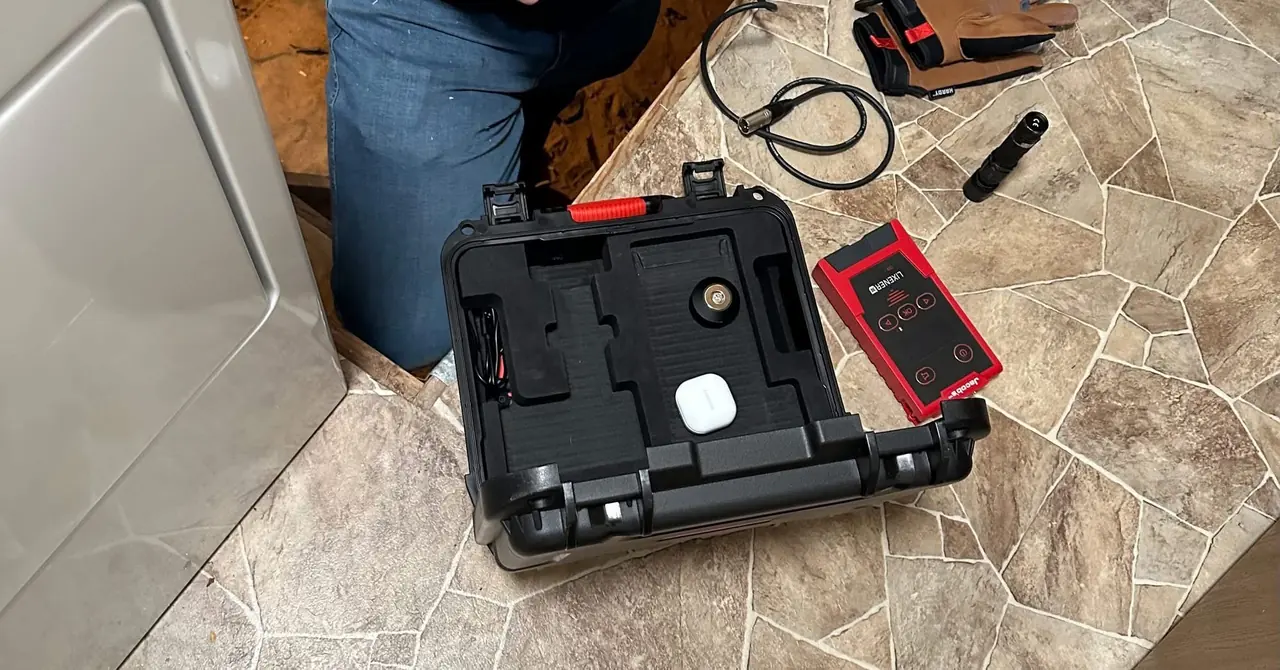
Leak detection equipment case open beside a crawlspace access under a laundry area
Detection gear set up at a crawlspace access. Example photo.

Try this before you call

Read your meter in 15 minutes

A moving meter with everything off means water is leaving your pipes somewhere. It costs nothing to check, and the result tells us where to start.

  1. Step 1Shut everything offClose every tap, the ice maker, the washer and the sprinklers.
  2. Step 2Find your meterIt sits in a box near the street, or inside where the line enters.
  3. Step 3Watch the low-flow dialWait 15 minutes. If the small dial or triangle moves, water is still going somewhere.

Full meter test guide for Greeley homes

Why it pays to look

What a hidden leak costs you

Most leaks start small. A pinhole in a copper line. A cracked fitting under the slab. A sprinkler valve that never quite closes. You do not see them. You see the bill.

The EPA says household leaks can waste nearly 10,000 gallons of water a year. It also says leaks can add up to 10 percent to a water bill. Those numbers describe an average leak. A broken line under a lawn or a slab can waste that much in a few weeks.

In Greeley, the math gets harsher. The city bills single-family homes on a water budget. Water up to your budget costs the lowest rate. Water above it moves into higher tiers, and each tier costs more per 1,000 gallons. A leak adds gallons you never meant to use, and it pushes you into the expensive tiers.

Water also does damage that never shows on a bill. It soaks drywall, lifts floors, rots framing and feeds mold. Under a slab, it can wash out soil. Many Front Range soils contain clay that swells and shrinks. Extra water moves the ground and strains the pipes in it.

Finding a leak early is the cheapest fix. Our guide to how Greeley water budgets work shows how tiers turn a small leak into a big bill. Our high water bill guide shows what to check first.

What we find

Leaks that do not show themselves

Pick the problem that sounds like yours. Each page explains the signs, how we find the leak and what happens next.

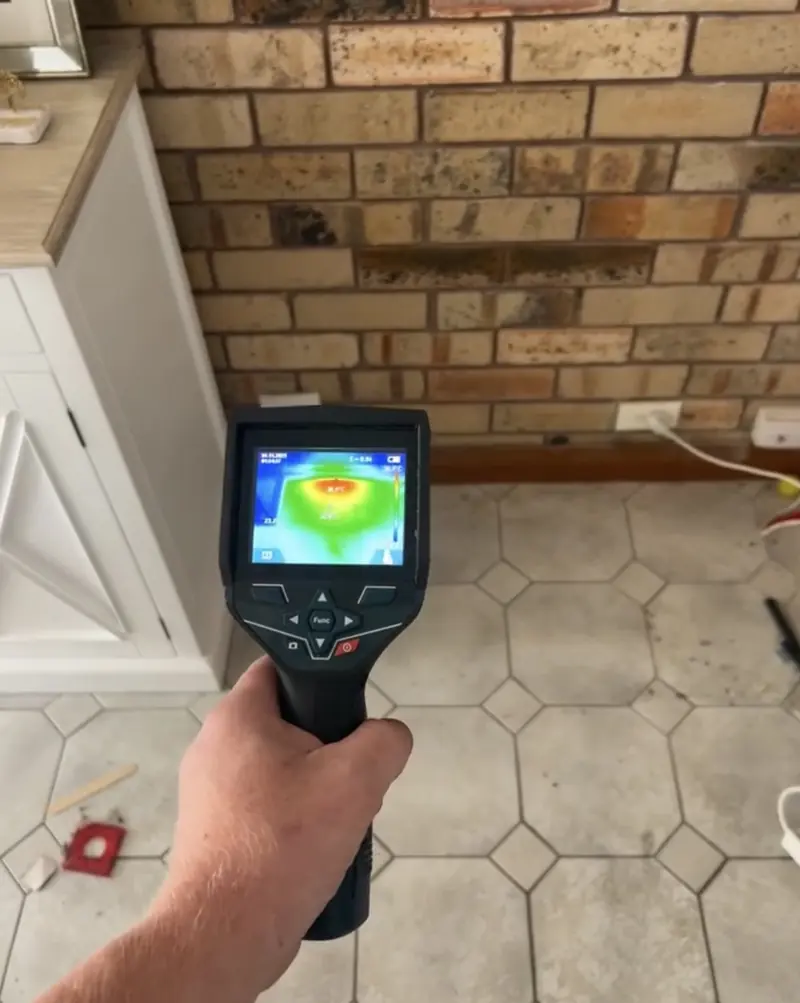
Thermal camera screen showing a cool damp patch low on a brick wall
A thermal camera shows a cold, wet patch low on a wall.
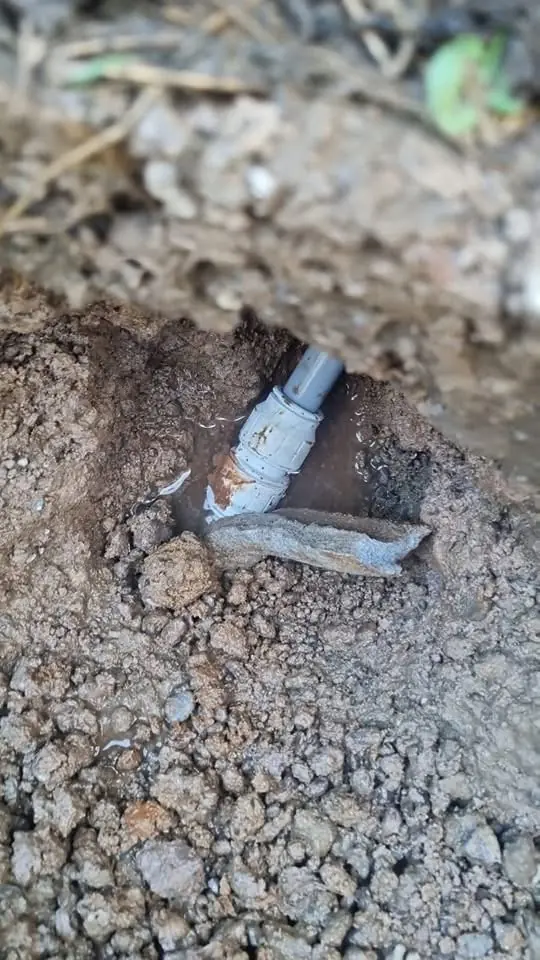
Plastic pipe coupling in wet soil on a buried water line
A weeping coupling on a buried water line.
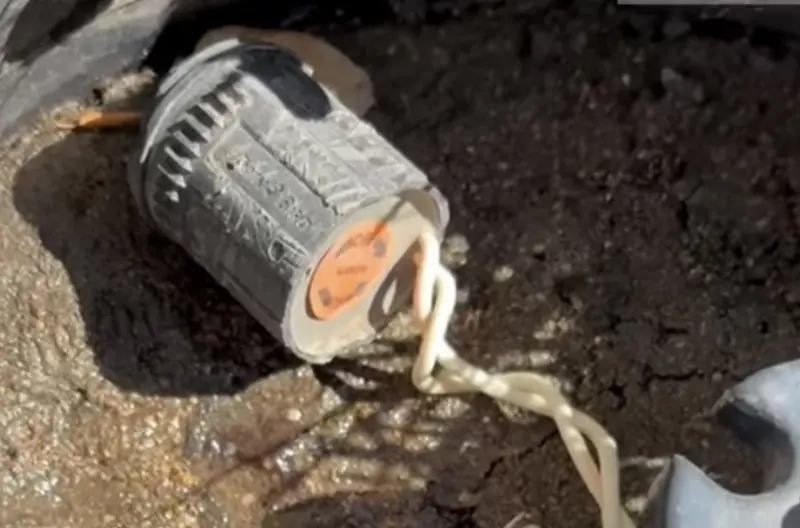
Sprinkler valve solenoid pulled from the soil next to wet ground
A sprinkler valve solenoid pulled from the soil.
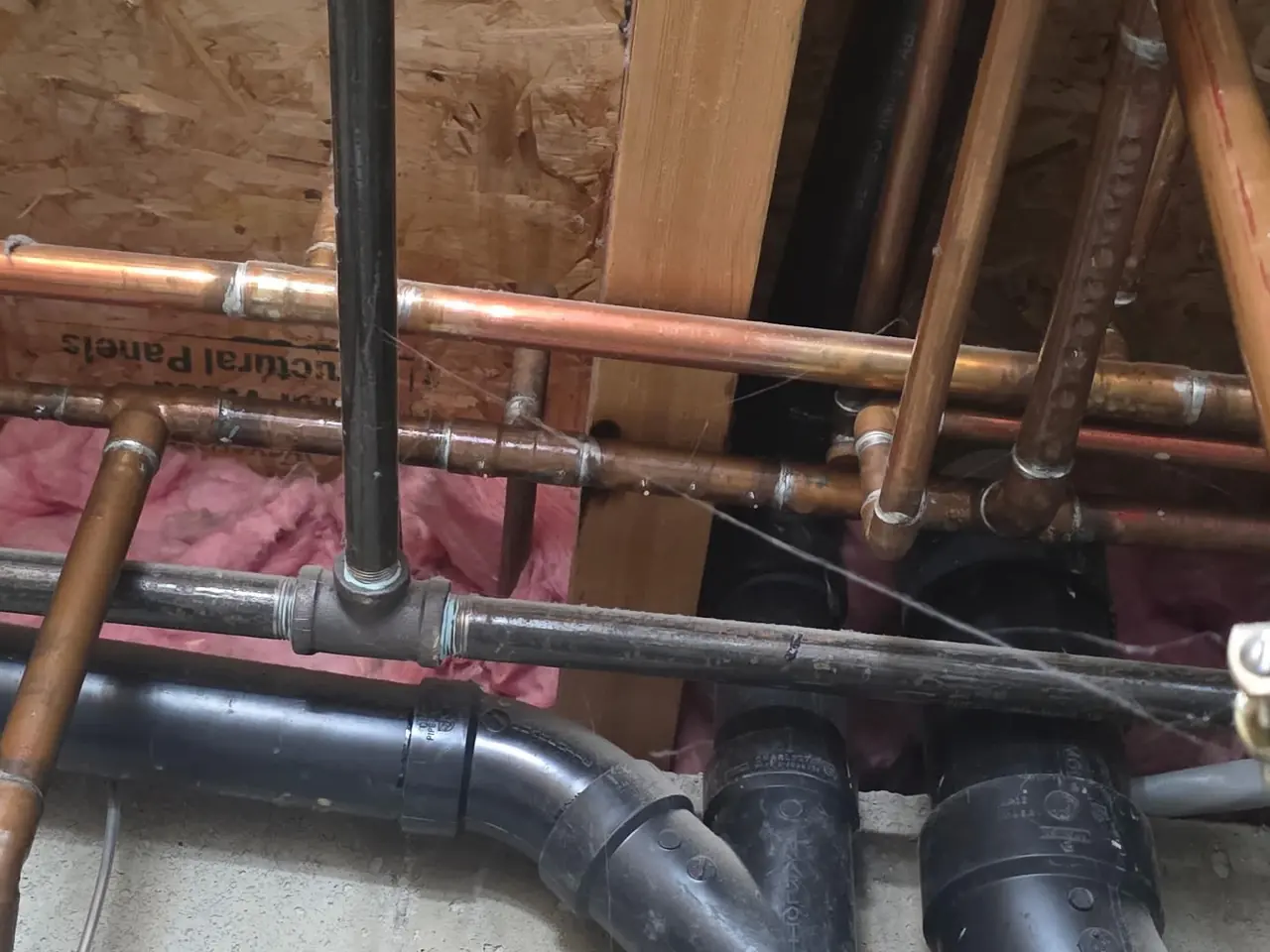
Technician holding a handheld detector against copper water pipes

How we find it

Listen, look, then test

Listen

Ground and pipe microphones pick up the hiss of water escaping under pressure. The sound grows louder as we move toward the break.

Look

Thermal imaging shows cold, wet areas behind finished walls and floors. A leaking hot water line shows as a warm patch on a slab.

Test

Pressure tests show which line is losing water, so we do not chase the wrong pipe. We close valves one at a time to split the house, the sprinklers and the service line.

No single tool solves every leak. Plastic pipe carries sound poorly. Copper carries it well. Deep leaks under concrete sound different from shallow ones in a yard. So we combine methods and cross-check the results before we mark anything.

What a visit looks like

From your call to a marked spot

Here is what happens, in order, when you call Leak Detector Greeley.

  1. You call and tell us what you see.We ask where the damage sits, when you first noticed it and how your bill changed. If you have run the meter test, tell us what the dial did.
  2. We explain what the visit includes.You hear what to expect on scope and cost before we book. Our leak detection cost page shows the market ranges we use as a guide.
  3. We test your meter.A moving dial with every fixture off proves that a pressurized line leaks. A still dial points us toward drains, groundwater or a billing issue.
  4. We split the system.We close the irrigation supply, then the house main, and watch the meter after each step. The result tells us whether the leak sits outside, inside or underground.
  5. We search the zone.We use listening gear, thermal imaging, moisture readings and pressure tests. We stay in the zone the earlier tests point to.
  6. We mark the leak.We mark the floor, wall or ground with tape, paint or a flag, so a plumber opens one small spot.
  7. We write it up.You receive a plain report with readings, photos and findings. See what it includes on our leak detection report page.

Small hole, right place

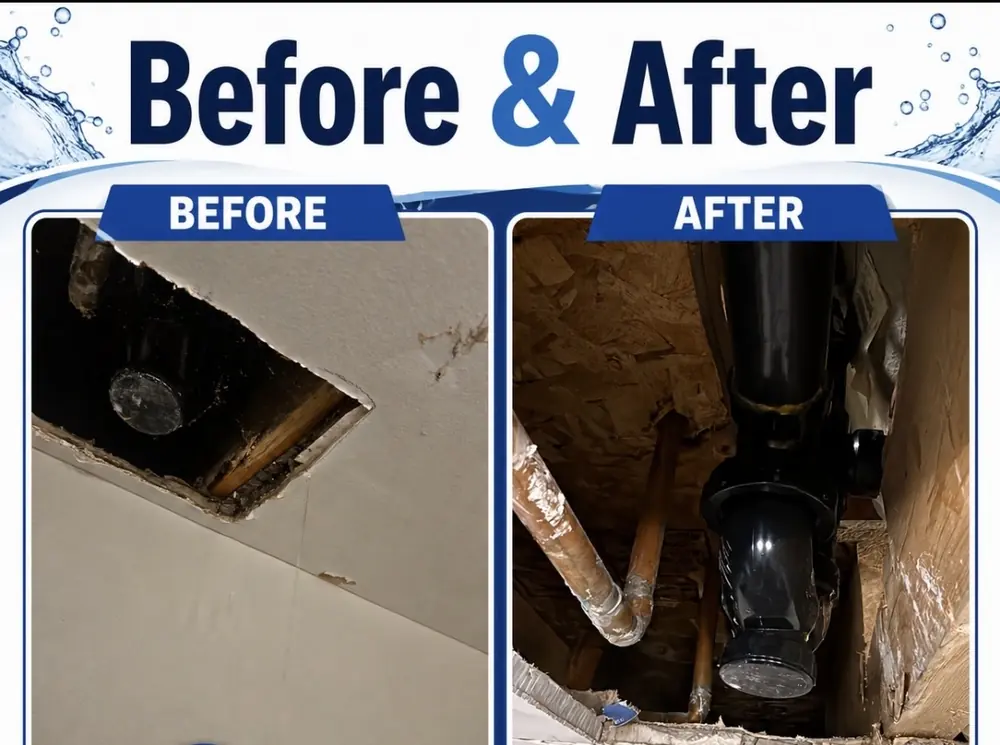
Before and after the access opening

Finding the leak is step one. When a wall or ceiling has to open, we mark one spot, so the plumber cuts there and not everywhere.

A marked spot saves money twice. The plumber spends less time searching. You also patch and paint one small hole, not four.

Example photo. A licensed plumber does the repair itself.

Before and after photos of a ceiling access opening with the plumbing exposed

Side by side

Three ways to chase a leak

The difference shows up in how much of your house gets opened and how sure the answer is.

What you getLeak Detector GreeleyDig and guessPlumber, no detection tools
Finds the exact spotYes, marked on siteOnly by luckOften a best guess
How much gets opened upOne small access pointTrenches or broken slabSeveral test holes
Damage to floors and yardKept to a minimumHeavyModerate
Written report for insuranceYesNoNot always
Who repairs itA licensed plumber, spot already markedA crew you hire and hopeThe same plumber

Leak Detector Greeley

Finds the exact spot
Yes, marked on site
How much gets opened up
One small access point
Damage to floors and yard
Kept to a minimum
Written report for insurance
Yes
Who repairs it
A licensed plumber, spot already marked

Dig and guess

Finds the exact spot
Only by luck
How much gets opened up
Trenches or broken slab
Damage to floors and yard
Heavy
Written report for insurance
No
Who repairs it
A crew you hire and hope

Plumber, no detection tools

Finds the exact spot
Often a best guess
How much gets opened up
Several test holes
Damage to floors and yard
Moderate
Written report for insurance
Not always
Who repairs it
The same plumber

General comparison. Every home is different, and a plumber with detection tools of their own can do some of this too.

Why homeowners call us

Four reasons Greeley homeowners pick the specialist

Detection is the whole job

We do not sell repairs, so we have no reason to tell you that you need one. We find the leak, or we tell you that your plumbing passed. A clean result still saves you from the wrong fix. A sump pump will not cure a pipe problem.

We mark the spot, then hand it over

A licensed plumber fixes the leak through one small opening, with the location already marked. Plumbers charge for time, so a marked spot often lowers the repair quote as well.

We know Greeley water

Tiered billing, early freezes, big sprinkler systems and shifting clay soil all shape how Greeley homes leak. We test with those facts in mind.

You get it in writing

A report that says what we tested, what we found and where. It is ready for your insurer, landlord, buyer or plumber.

Greeley-specific

Why leaks in Greeley homes look the way they do

Tiered billing makes small leaks expensive

The city says its water budget tiers rest on efficient use for your lot size and household. The city's 2024 rate manual lists four tiers. The price per 1,000 gallons rises from about $5.61 in the first tier to about $11.81 in the fourth. Rates change, so check current numbers with the city.

A leak of one gallon per minute wastes 1,440 gallons a day, or about 43,200 gallons in 30 days. At those 2024 rates, that is roughly $240 in the lowest tier and $510 in the highest, for water alone.

Clay soil moves pipes

The Colorado Geological Survey maps swelling soil and rock along the Front Range. Clay swells when wet and shrinks when dry. Slabs shift. Buried service lines bend at joints. A leak adds water to that soil, which speeds the movement. Our pages on slab leak detection and water line leak detection explain how we find these breaks.

Freezes crack pipes that leak later

Greeley says the first freeze usually arrives in October, and it suggests winterizing sprinklers in mid-October. A hard freeze can crack a fitting or a hose bib. The leak often starts only after the thaw. See our guides on sprinkler blowout leak checks and freeze and thaw leaks.

Big lawns hide sprinkler leaks

Many Greeley lots hold large lawns with multi-zone systems. Broken lines and stuck valves can run for weeks with no wet spot. See irrigation leak detection.

Homes of every age

Greeley began as the Union Colony in 1870, and the oldest homes sit near downtown. Newer subdivisions spread west and east. Older homes may have galvanized steel pipe. Homes from the late 1970s to the mid-1990s may have gray polybutylene pipe. Newer homes use PEX and CPVC, which depend on good fittings. Each age has its own leak pattern. See the pages for Central Greeley, West Greeley and East Greeley.
Inside your walls

What your pipes are made of changes where they leak

Pipe material shapes how a line fails and where we start looking. A quick look at your plumbing tells us a lot. Here is what we see most often in Greeley homes.

  • Galvanized steel. Common in older homes. It rusts from the inside and narrows over time. Leaks often sit at threaded joints.
  • Copper. Found in homes of many ages. It can develop pinholes after decades. A pinhole sprays a fine mist inside a wall.
  • Gray polybutylene. Used in some homes from the late 1970s to the mid-1990s. Its joints and fittings can fail. A plumber can confirm what you have.
  • PEX. Common in newer homes. It handles cold well, but a poor crimp at a fitting can seep for months.
  • CPVC and PVC. Rigid plastic. It can crack at joints from soil movement, pressure or a freeze.
  • Cast iron and ABS drains. Drain lines leak only when you run water. Your meter will not move for a drain leak, so we test them a different way.

Plastic carries sound poorly, and copper carries it well. That is one reason we use more than one method on every job.

Who calls us

Homeowners, landlords, buyers and property managers

Most calls come from homeowners who see a bill jump or a stain spread. Others have a different reason to want facts.

  • Homeowners who want to stop a leak without tearing out a wall.
  • Landlords and tenants who need a written record of the source and the date. See our page for Central Greeley, where many rentals sit near the university.
  • Sellers and buyers who need to settle a stain or a high reading before a closing.
  • Condo owners and HOAs who need to know which line leaked when water crosses units.
  • Owners with a plumber's bill and no answer. If someone already searched and found nothing, our guide on what to do next explains why leaks hide.

If you need proof for an insurer, a buyer or a landlord, a written report helps. We do not decide coverage, and we do not give legal advice. We report what we tested and what we found.

Know the signs

When to suspect a hidden leak

You do not need to see water to have a leak. Watch for these signs:

  • A meter that moves when every tap, appliance and sprinkler is off.
  • A water bill that climbs with no change in habits.
  • The sound of hissing or trickling in a quiet house.
  • A warm spot on a floor.
  • Stains, peeling paint or soft drywall.
  • A musty smell or new mold.
  • Low water pressure in every tap.
  • A wet or unusually green patch in the yard.

Two cheap checks can rule out the usual suspects. First, test every toilet. Add a few drops of food coloring to the tank and wait 5 to 10 minutes without flushing. The EPA says color in the bowl means a leak. Second, look under every sink and behind the washer, dishwasher and fridge for drips and soft cabinet floors. If both checks pass and the meter still moves, the leak sits somewhere harder to see.

One sign may have a simple cause. Two or three together point to a real leak. Read our full list of the signs of a hidden water leak. Use the hidden leak detection page to see where leaks hide inside a home.

If a damp wall puzzles you, read how to tell a leak from groundwater. If a plumber already looked and found nothing, read what to do when a plumber cannot find the leak.

Cost

What leak detection costs

Price depends on the kind of leak, the size of the property and how hard the leak is to hear. Market sources give a useful range. This Old House lists slab leak detection at about $150 to $600. Angi reports an average near $280, with most homeowners paying $150 to $400.

Those figures cover finding the leak. The repair costs extra, and it varies a lot. Angi puts the total for a slab leak repair, including detection, at roughly $630 to $4,400.

These are market ranges, not our quote. Call and describe what you see, and we will explain what the visit includes before we book it. See the full breakdown on our leak detection cost page.

Hours

Emergency calls 24/7, regular visits on weekdays

We answer emergency calls 24 hours a day, seven days a week. Regular visits run Monday through Friday, 7 am to 5 pm.

If water is flooding your home, shut off the main valve first, then call. If water touches electrical outlets or panels, stay away and call an electrician. Take photos of the damage for your insurer.

Our office is at 2420 W 16th St, Greeley, CO 80634. Please call before you stop by, because our technicians work in the field.

Straight answers

What we do and what we do not do

We find leaks. We do not repair them. A licensed plumber or a sprinkler contractor does that work. Colorado licenses plumbers through the state, so check any plumber's license before you hire them.

We also do not test water quality or lead, do mold testing, or restore water damage. We do not give insurance or legal advice, and we cannot say whether a claim will be paid. If your problem needs another trade, we tell you so.

Sometimes we cannot find a leak in one visit. Some leaks sit too deep, too small or too quiet to locate. When that happens, we say so, and we give you a written record of what we tested and ruled out. That record helps the next step. Read more about Leak Detector Greeley, or see the contact page for what to tell us on the call.

Common questions

Before you call

How do I know if I have a hidden leak?

Watch for a bill that climbs for no reason. Check whether your meter moves with every tap off. Look for damp or warm spots on a floor. Notice a musty smell, or the sound of water when nothing runs. Our guide to the signs of a hidden water leak lists more.

Will you break open my floor or wall?

Finding a leak usually does not need demolition. If a repair needs an opening, we mark the exact spot first. The plumber then cuts one small hole in the right place.

Do you repair the leak too?

No. We do detection only. Once we locate and mark the leak, a licensed plumber handles the repair.

Why did my Greeley water bill jump?

Greeley bills single-family homes in tiers based on a water budget. A steady leak can push your use into the higher tiers. The bill then rises faster than the water you use. Read how the water budget works.

What should I do first if I think I have a leak?

If water is actively flooding, shut off the main valve. Otherwise, run the meter test, note what you see, and call. Tell us where the damp spots are and when the bill changed.

How much does leak detection cost?

Market sources put slab leak detection at about $150 to $600, and Angi reports an average near $280. Your price depends on the home and the leak. See our cost page, then call for a quote.

Do you answer calls at night and on weekends?

We answer emergency calls 24 hours a day, seven days a week. Regular visits run Monday through Friday, 7 am to 5 pm.

Can you give me a report for my insurance company?

Yes. We write a plain report with meter readings, tests, photos and the leak location. Coverage depends on your policy, so ask your agent what it covers. See our report page.

Think you have a leak? Tell us what you see.

Call and describe the damp spot or the bill. We will tell you what to check and when we can come out.

(970) 447-1609

Call now